Understanding the Materials
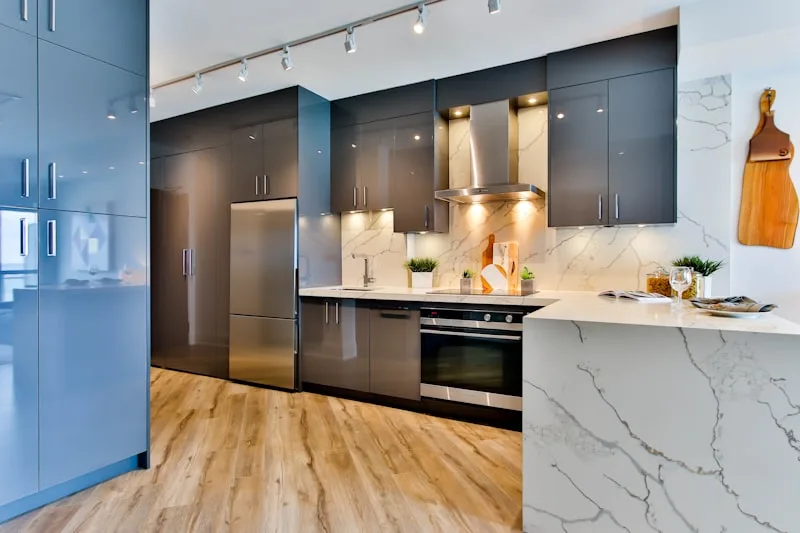
Granite is a natural stone quarried from the earth, cut into slabs, and polished to a brilliant finish. Each slab is unique, with natural variations in color, pattern, and veining that many homeowners find appealing. Quartz countertops, on the other hand, are engineered from approximately 90-95% ground natural quartz crystals mixed with polymer resins and pigments. This manufacturing process allows for consistent colors and patterns while maintaining the durability of natural stone. Both materials offer excellent performance as kitchen countertops, but they differ in important ways.
Durability and Maintenance
Granite is extremely hard and heat-resistant — you can set hot pots directly on the surface without damage. However, granite is porous and must be sealed annually to prevent staining from oils, wine, and acidic foods. Quartz is non-porous and never needs sealing, making it more resistant to staining and bacterial growth. This makes quartz particularly popular in busy family kitchens. However, quartz is more susceptible to heat damage and can discolor or crack from direct contact with hot cookware. Both materials resist scratching well, though cutting directly on either surface will dull your knives.
Cost and Installation
Both granite and quartz fall in a similar price range of $50-150 per square foot installed, depending on the grade and complexity of the project. Premium granites with exotic patterns can exceed $200 per square foot, while basic quartz starts around $50. Installation for both requires professional fabrication and is not a DIY project. Granite slabs should be selected in person at the stone yard since each piece is unique. Quartz can be selected from samples since the patterns are consistent. Both materials add significant value to a home and typically provide a strong return on investment when selling.
Frequently Asked Questions
Which is more durable, granite or quartz?
Both are highly durable but differ in specific ways. Granite is more heat-resistant and can withstand hot pots directly. Quartz is non-porous and never needs sealing, making it more resistant to staining and better for busy family kitchens.
How much do granite and quartz countertops cost?
Both materials range from $50–150 per square foot installed. Premium exotic granites can exceed $200 per square foot, while basic quartz starts around $50. Professional fabrication and installation is required for both.
Does granite need to be sealed?
Yes. Granite is porous and must be sealed annually to prevent staining from oils, wine, and acidic foods. Quartz, being engineered and non-porous, never needs sealing — a key advantage for busy kitchens.
JC
James Carter
James is a certified general contractor and home renovation expert. He has completed over 200 residential remodeling projects across the Northeast.