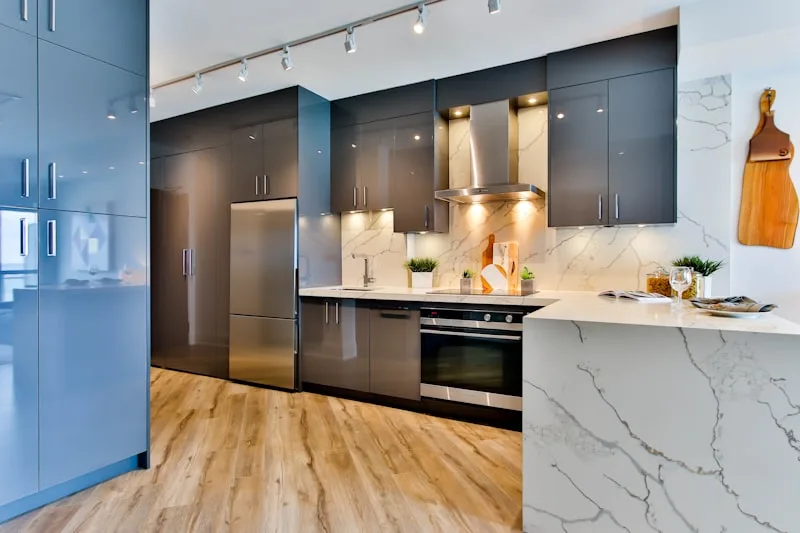
The Allure of Marble
Marble has been a symbol of luxury in homes and buildings for centuries. Its natural veining patterns, luminous surface, and cool-to-the-touch feel create an atmosphere of elegance that few other materials can match. Carrara marble from Italy remains the most popular choice for residential kitchens, offering white-to-gray tones with soft veining. Calacatta marble features bolder, more dramatic veining and commands a higher price. Marble is naturally cool, making it the preferred surface for pastry chefs and avid bakers who need to work with temperature-sensitive doughs.
The Reality of Maintenance
Marble is softer and more porous than granite or quartz, which means it scratches and stains more easily. Acidic substances like lemon juice, vinegar, and tomato sauce can etch the polished surface, leaving dull spots. Regular sealing — every 6-12 months — is essential but won’t prevent etching. Many marble owners embrace the patina that develops over time as part of the material’s living character. If perfection is important to you, consider a honed (matte) finish, which hides etching better than polished surfaces. Always use cutting boards and wipe spills immediately.
Cost and Alternatives
Genuine marble countertops cost $75-250 per square foot installed, depending on the variety and thickness. For those who love the marble aesthetic but want lower maintenance, several alternatives exist. Quartz manufacturers offer marble-look patterns that are virtually indistinguishable from the real thing at a distance. Porcelain slabs with marble veining can be used for countertops and cost significantly less. Cultured marble — a blend of marble dust and resins — offers a more affordable option for bathroom vanities.
JC
James Carter
James is a certified general contractor and home renovation expert. He has completed over 200 residential remodeling projects across the Northeast.